

If you’ve discovered graffiti on your home, business, fence, warehouse or commercial property, one of the first questions you’ll probably ask is: how much does graffiti removal cost?
The cost of graffiti removal in Australia can vary considerably. In 2026, a small professional graffiti removal job may cost around $200–$400, while medium-sized jobs commonly fall around $400–$1,000+. Large commercial projects can cost $1,000–$5,000+, particularly when multiple surfaces, difficult access, extensive graffiti or specialised equipment are involved.
For particularly difficult surfaces such as sandstone, heritage masonry or heavily porous concrete, professional cleaning can reach $120–$250+ per square metre.
These are indicative contractor prices rather than fixed national rates. The final quote depends on the surface, size of the graffiti, type of paint, accessibility, age of the graffiti and the removal method required.
What Is the Cost of Graffiti Removal in Australia?
For property owners looking to budget for professional graffiti removal, the following ranges provide a useful starting point:
| Type of graffiti removal | Indicative professional cost |
|---|---|
| Small residential graffiti tag | $200–$400 |
| Small commercial job | $250–$500 |
| Medium graffiti removal project | $400–$1,000+ |
| Large commercial or industrial job | $1,000–$5,000+ |
| Straightforward non-porous surfaces | $40–$80/m² |
| Brick and concrete | $60–$120/m² |
| Difficult or weathered graffiti | $80–$150+/m² |
| Sandstone and sensitive heritage surfaces | $120–$250+/m² |
| Anti-graffiti coating | $30–$70+/m² |
| Urgent or after-hours service | $300–$600+ minimum |
These figures are intended as a guide. Professional graffiti removal companies may quote a fixed project price, minimum call-out fee, hourly rate or a combination of a service fee and square-metre pricing.
Australian pricing information currently places basic graffiti removal call-outs around $150–$350, while common surface-based rates range from approximately $25–$60/m² for non-porous surfaces, $40–$90/m² for brick and concrete, and up to $90–$250/m² for sensitive surfaces. (GoingRate)
For customers arranging a complete professional service, however, it is sensible to budget for the overall job rather than assuming the lowest advertised per-square-metre price will apply.
How Much Does a Small Graffiti Removal Job Cost?
A small graffiti tag doesn’t necessarily mean a small contractor bill.
For a professional to remove a single tag, they still need to travel to the property, assess the surface, bring the appropriate equipment and chemicals, complete the cleaning and leave the area tidy.
As a result, a small residential graffiti removal job will often cost approximately $200–$400.
The price may be higher if:
- The graffiti is on a difficult surface.
- Several cleaning treatments are required.
- The wall is heavily porous.
- Access is restricted.
- The graffiti is high above ground level.
- The surface needs repainting.
- The job is required urgently or outside normal hours.
For small jobs, a minimum call-out can therefore have a much greater impact on the final price than the actual size of the graffiti.
How Much Does Commercial Graffiti Removal Cost?
Commercial graffiti removal is usually priced according to the overall scope of work.
A small shopfront or commercial wall may cost around $250–$500, while larger commercial properties can easily reach $1,000–$5,000+.
Large projects can include:
- Warehouses
- Shopping centres
- Apartment buildings
- Retail precincts
- Office buildings
- Industrial facilities
- Schools
- Car parks
- Fences and boundary walls
The larger the property, the more important it becomes to assess the entire site rather than pricing individual tags separately.
If several areas have been vandalised, bundling them into one visit may reduce the effective cost because travel, equipment setup and mobilisation are spread across the project.
For businesses that experience graffiti repeatedly, an ongoing commercial graffiti removal service can also be more cost-effective than organising individual emergency call-outs every time a new tag appears.
Graffiti Removal Cost Per Square Metre
Square-metre pricing is commonly used for larger graffiti removal projects, but it should not be treated as a universal Australian rate.
The type of surface makes a significant difference.
Smooth and non-porous surfaces: $40–$80/m²
Glass, metal, sealed concrete and some painted surfaces can be comparatively straightforward to clean.
Because these materials are less porous, graffiti generally remains closer to the surface.
However, etched glass or damaged paint may require additional restoration rather than simple cleaning.
Brick and concrete: $60–$120/m²
Brick and raw concrete are more challenging because they can absorb paint.
A contractor may need to use specialised graffiti-removal products followed by controlled pressure washing or another suitable cleaning technique.
The age of the graffiti and condition of the masonry can also affect the price.
Difficult or heavily weathered graffiti: $80–$150+/m²
Multiple layers of graffiti, old paint, permanent markers and weathered coatings can require several treatment stages.
The contractor may also need to deal with residual staining or “ghosting” after the visible paint has been removed.
Sandstone and heritage masonry: $120–$250+/m²
Sensitive stone and heritage surfaces require considerably more care.
Aggressive pressure washing, abrasive blasting or unsuitable chemicals can remove the underlying material along with the graffiti.
Professional contractors may therefore need to carry out test patches and use specialised cleaning techniques.
For heritage buildings, always check whether additional approvals or conservation requirements apply before undertaking cleaning work.
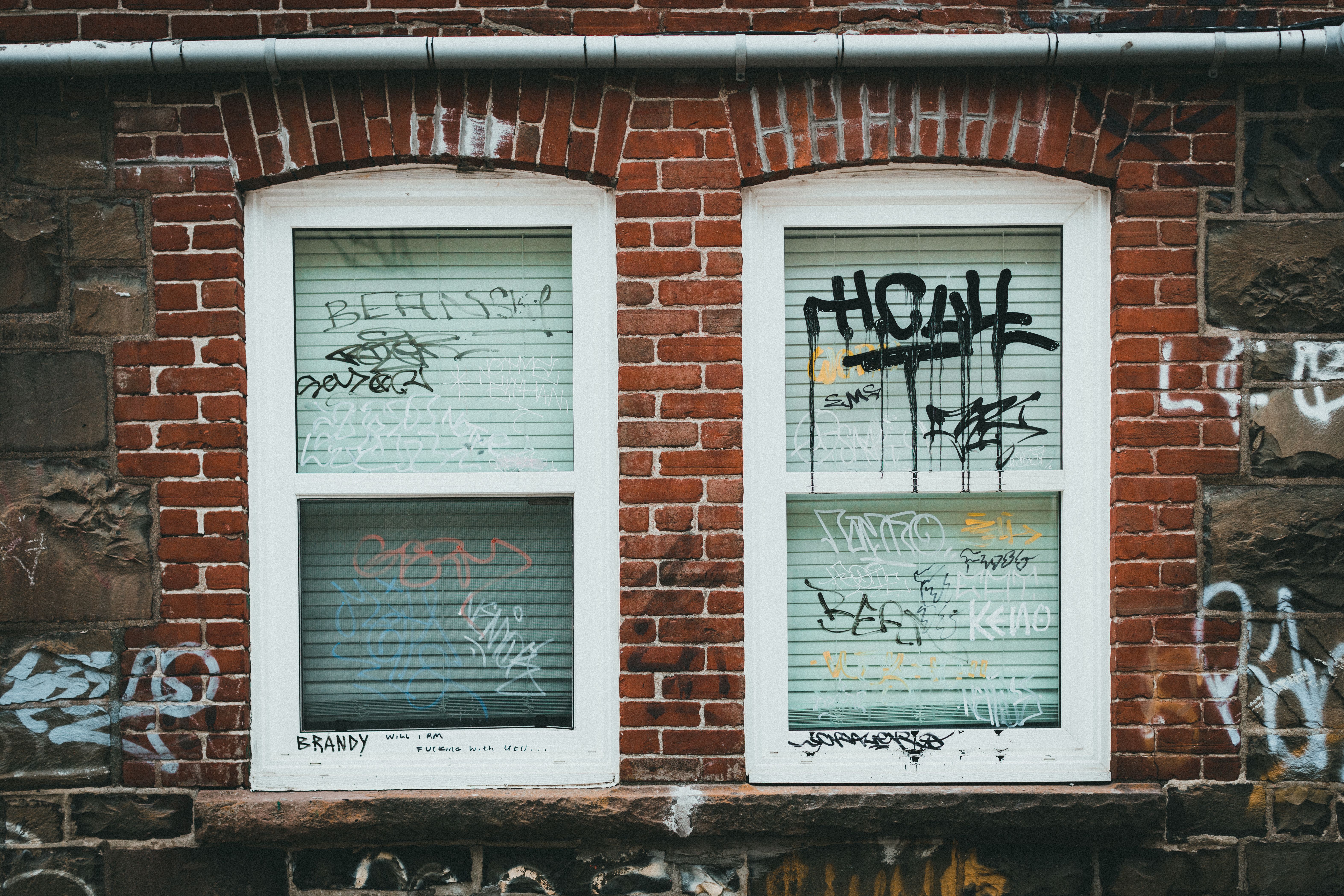
Why Does Graffiti Removal Cost So Much?
The price isn’t simply paying someone to remove paint.
Professional graffiti removal involves choosing a method that removes the vandalism without unnecessarily damaging the surface underneath.
Depending on the property, the contractor may need to:
- Identify the substrate.
- Determine the type of graffiti.
- Select an appropriate cleaning product.
- Test the treatment.
- Protect surrounding surfaces.
- Apply the treatment.
- Allow the product to work.
- Agitate or wash the affected area.
- Repeat the treatment if required.
- Remove remaining residue or staining.
- Clean the surrounding area.
- Apply protective coating if requested.
Equipment, insurance, labour, transport and chemical handling also form part of a professional contractor’s operating costs.
This is why comparing two quotes solely on the price per square metre can be misleading.
What Factors Affect the Cost of Graffiti Removal?
Several factors can change the final price significantly.
1. Surface type
The substrate is one of the biggest variables.
Graffiti on a sealed metal roller door can be considerably easier to remove than graffiti embedded in old brickwork.
Common substrates include:
- Brick
- Concrete
- Render
- Painted walls
- Metal
- Roller shutters
- Glass
- Timber
- Pavers
- Natural stone
- Heritage masonry
Each requires a different approach.
2. Size of the graffiti
A larger affected area generally requires more labour, cleaning products, water and equipment.
However, larger jobs can sometimes have a lower effective cost per square metre because mobilisation costs are distributed across a larger project.
3. Type of paint
Spray paint, permanent marker, paint pens and different coatings can behave very differently during cleaning.
A professional contractor should select the treatment based on both the graffiti and the surface underneath it.
4. Age of the graffiti
Fresh graffiti is generally preferable to remove before it has been exposed to prolonged weathering.
UV exposure, rain and time can make some graffiti more difficult to remove and increase the risk of residual staining.
Victoria Police recommends removing graffiti as soon as possible. (Victoria Police)
5. Accessibility
Access can have a major effect on the quote.
Ground-level graffiti on a driveway wall is very different from graffiti on a second-storey façade.
Additional equipment or specialist access may be required for:
- High walls
- Bridges
- Roofs
- Elevated façades
- Railway infrastructure
- Buildings beside busy roads
- Restricted commercial sites
Scaffolding, elevated work platforms, rope access and traffic management can all increase project costs.
6. Repainting
Sometimes graffiti removal exposes an existing problem with the underlying paint.
If the original coating has deteriorated, faded or been permanently stained, cleaning alone may not restore the appearance of the wall.
In these cases, repainting may be the more practical solution.
7. Anti-graffiti protection
If the same property is repeatedly targeted, adding a protective coating may increase the upfront cost but reduce future cleaning expenses.
Does the Type of Graffiti Matter?
Absolutely.
Professional contractors encounter a wide range of vandalism, including:
- Aerosol spray paint
- Permanent marker
- Paint pens
- Household paint
- Industrial coatings
- Multiple layers of graffiti
Some materials can be removed relatively quickly.
Others require multiple applications or different cleaning techniques.
A contractor should never assume that one chemical or pressure setting will work on every surface.
The objective is to remove the graffiti while preserving the substrate.
Should You Pressure Wash Graffiti?
Pressure washing can be an effective part of professional graffiti removal, but more pressure doesn’t automatically mean better cleaning.
Using excessive pressure on the wrong surface can cause damage to:
- Brick
- Mortar
- Render
- Sandstone
- Painted surfaces
- Heritage masonry
The appropriate pressure, temperature, nozzle and cleaning product depend on the substrate.
For this reason, professional [pressure washing services] should be tailored to the surface rather than treating every wall in the same way.
How Much Does Anti-Graffiti Coating Cost?
If a wall is repeatedly tagged, removing graffiti every few weeks can become expensive.
Anti-graffiti coatings can help break this cycle by creating a surface that is easier to clean.
As an indicative 2026 guide, professional application can cost approximately:
$30–$70+ per m²
depending on the coating system, preparation requirements, substrate and size of the project. (GoingRate)
There are two broad approaches.
Sacrificial coatings
A sacrificial coating is designed to be removed along with the graffiti.
The protective layer can then be reapplied.
Permanent coatings
Permanent systems are designed to remain on the surface through repeated graffiti removal.
The appropriate system depends on the property and how frequently it is targeted.
For properties experiencing repeated vandalism, professional anti-graffiti coatings may offer better long-term value than repeatedly paying for intensive graffiti removal.
Is Anti-Graffiti Coating Worth It?
Consider a commercial wall that costs $500 to clean each time it is tagged.
If the wall is cleaned four times per year, that represents:
$500 × 4 = $2,000 per year
If the wall continues to be targeted, a protective coating could potentially reduce the long-term maintenance cost.
The calculation becomes particularly relevant for:
- Retail properties
- Apartment buildings
- Laneway walls
- Warehouses
- Schools
- Commercial façades
- Boundary fences
- Properties near major transport routes
The right decision depends on how frequently the property is targeted and how difficult the graffiti is to remove.
Does Council Graffiti Removal Affect Private Contractor Prices?
Council graffiti programs are useful for understanding the scale of Australia’s graffiti problem, but their internal costs shouldn’t be used as a direct comparison with a private contractor’s quote.
For example, the City of Melbourne reports receiving more than 5,000 graffiti removal requests each year and removing more than 50,000 m² of graffiti annually. (City of Melbourne)
Frankston City Council reported removing 42,140 m² of graffiti during 2024–25, with approximately $560,000 spent on graffiti removal during the financial year. (Frankston City Council)
These large-scale operations have very different economics from a contractor travelling to a private property for a single job.
A private contractor needs to account for:
- Labour
- Travel
- Vehicle costs
- Insurance
- Equipment
- Cleaning chemicals
- Protective equipment
- Business overheads
- Waste management
- Administration
- GST
The relevant question for a property owner isn’t what a council spends per square metre. It’s what it costs to have a professional contractor attend the property and safely complete the work.
Can Council Remove Graffiti From Your Property for Free?
Possibly.
Some Australian councils offer graffiti removal programs, cleaning kits or other assistance to residents and property owners.
However, eligibility varies between municipalities.
Before paying for a private service:
- Photograph the graffiti.
- Report it to your local council.
- Check whether your property qualifies for a removal service.
- Ask whether a free cleaning kit is available.
- Check any conditions attached to the program.
For example, the City of Melbourne operates a graffiti management program covering eligible private property, while Frankston City Council has provided residents with graffiti removal kits. (City of Melbourne; Frankston City Council)
If council assistance isn’t available, a professional contractor can provide a quote based on the actual condition of the property.
How to Save Money on Graffiti Removal
You don’t necessarily need to find the cheapest contractor to reduce your overall costs.
Instead, focus on reducing the number of times you need to pay for the same problem.
Remove graffiti quickly
Fast removal can reduce the likelihood of additional vandalism and may prevent paint from becoming more difficult to remove.
Combine multiple areas
If several walls have been tagged, ask whether the contractor can clean everything during the same visit.
Consider preventative coatings
If the same surface is repeatedly targeted, calculate your annual cleaning costs and compare them with an anti-graffiti coating.
Use rapid-response services
Businesses that are regularly targeted may benefit from having a contractor they can contact quickly rather than searching for a new provider after every incident.
Maintain the surrounding property
Good lighting, clean façades, maintained landscaping and prompt graffiti removal can all contribute to a property appearing actively managed.
What Should a Graffiti Removal Quote Include?
Before accepting a quote, check exactly what is included.
A professional quote should ideally identify:
- Affected areas
- Approximate area in m²
- Surface type
- Cleaning method
- Chemicals or treatments
- Equipment
- Access requirements
- Labour
- Travel
- Final cleanup
- Repainting, if required
- Anti-graffiti coating, if requested
- GST
- Any minimum call-out fee
It should also explain any limitations.
For example, if graffiti has permanently stained porous masonry or etched glass, complete restoration may not be possible without replacing or damaging the underlying surface.
A reputable contractor should explain the expected result before beginning work.
How to Get an Accurate Graffiti Removal Quote
The fastest way to receive an initial estimate is usually to provide photographs.
Send the contractor:
- A close-up photo of the graffiti
- A photo showing the entire affected area
- Approximate dimensions
- The property’s suburb and postcode
- The type of surface, if known
- How long the graffiti has been present
- Any access restrictions
- Whether the work is urgent
For straightforward jobs, photographs may be enough to provide an initial price.
For large commercial properties, difficult access or sensitive surfaces, an on-site inspection may be necessary.
If you need professional help, you can request a graffiti removal quote and provide photographs of the affected area so the job can be assessed.
Frequently Asked Questions About Graffiti Removal Costs
How much does graffiti removal cost in Australia?
The cost of graffiti removal in Australia varies according to the size, surface and complexity of the job. As a general 2026 guide, small professional jobs may cost around $200–$400, medium jobs around $400–$1,000+, and larger commercial projects approximately $1,000–$5,000+.
How much does graffiti removal cost per square metre?
Professional graffiti removal can range from approximately $40–$80/m² for straightforward surfaces, $60–$120/m² for brick and concrete, and $120–$250+/m² for sensitive or heritage surfaces. Minimum call-out charges may apply to small jobs.
Is graffiti removal cheaper than repainting?
Sometimes. For small painted surfaces, repainting may be more economical. However, graffiti on brick, concrete, stone, glass or other exposed materials generally requires cleaning rather than simply painting over it.
Can graffiti be removed from brick?
Yes. However, brick is porous, so removing graffiti without damaging the brick or mortar requires an appropriate cleaning method. Old or heavily absorbed graffiti may require multiple treatments.
How quickly should graffiti be removed?
As soon as reasonably possible. Victoria Police recommends removing graffiti promptly, and early treatment can make some graffiti easier to deal with.
Does pressure washing remove graffiti?
Pressure washing can be part of the removal process, but the appropriate pressure depends on the substrate. Excessive pressure can damage brick, render, sandstone and painted surfaces.
Is anti-graffiti coating worth the investment?
It can be, particularly for properties that are repeatedly targeted. Compare the annual cost of professional graffiti removal with the upfront cost of applying a protective coating.
Can a council remove graffiti for free?
Some councils offer free removal or cleaning assistance, but programs and eligibility vary. Check your local council before arranging private removal.
What Is a Reasonable Budget for Professional Graffiti Removal?
If you’re looking for a simple budgeting guide, these ranges are a useful starting point:
Small residential job: $200–$400
Small commercial job: $250–$500
Medium-sized project: $400–$1,000+
Large commercial project: $1,000–$5,000+
Difficult or heritage surfaces: $120–$250+/m²
Anti-graffiti coating: $30–$70+/m²
The final cost of graffiti removal in Australia depends on the individual property, so these figures shouldn’t replace a professional assessment.
The Bottom Line on Graffiti Removal Costs
For most property owners, budgeting $200–$400 for a small professional job is a reasonable starting point. Larger or more complicated jobs can quickly move into the hundreds or thousands of dollars.
The biggest factors affecting the price are surface type, graffiti size, paint type, age, accessibility and the level of restoration required.
If your property is repeatedly targeted, don’t only consider the price of removing the next tag. Look at the annual maintenance cost and whether a preventative solution such as an anti-graffiti coating could provide better long-term value.
The best way to determine the cost of graffiti removal in Australia for your property is to have a professional assess the affected surface and provide a detailed quote.
For a fast estimate, send photographs of the graffiti, the approximate dimensions and the location of the property to a professional graffiti removal contractor.


